

Introduction
School teams are often tasked with meeting rising demand for psychoeducational evaluations while maintaining quality, accuracy, and compliance. With rising referrals, staff shortages, and complex student needs, the pressure can be hard to navigate without the right support.
In our webinar, Expanding Access & Accuracy: Reimagining Psychoeducational Evaluations, leaders in assessments and special education related services explore how new tools and systems help ease the burden. Digital administration, remote assessment, and more intentional use of team-based data can create new possibilities for improving access, reducing friction, and making more informed decisions about student support.
1. How evaluation demands are shifting and growing for school teams
Our panelists describe seeing a wider range of academic and social-emotional needs, more caregiver concern, and increased requests for individualized support. School evaluation systems today must navigate this growing volume and complexity, and distinguish between learning loss, unmet instructional needs, and disability-related needs.
When systems are stretched, it may be difficult for evaluators to move quickly while maintaining precision and quality. Students may wait longer for support, providers may lose time to logistics, and teams may have less space for the consultative work that helps schools respond early and thoughtfully.
2. What the psychoeducational evaluation process is meant to do
A psychoeducational evaluation is not a single test. It’s a structured, collaborative process that typically begins with a presenting concern and referral, followed by consent, data gathering, direct assessment, and team review. At Presence, psychoeducational evaluation services support the full process; our providers partner with school teams to collect, interpret, and apply data in a way that aligns with educational impact and team decision-making.
An evaluation helps determine whether a student meets eligibility criteria, and whether they need specially designed instruction or accommodations. While outside diagnoses or concerns may inform the conversation, school-based eligibility decisions must still be grounded in educational impact and team-based evidence.
3. Where digital assessment can support the process
Turning to digital assessments is one way teams can reduce administrative burden while maintaining consistency in delivery. Digital tools may help streamline parts of the evaluation workflow so evaluators can focus more on interpretation.
In practice, digital systems can:
- Reduce manual scoring and administrative steps
- Standardize instructions and audio delivery
- Limit the amount of time students spend out of class
- Support more targeted assessment planning
These efficiencies can help teams gather the data they need while minimizing disruption to instruction.
Tammy Stephens, Ph.D., Senior Manager of Product Support and Training at Riverside Insights®, highlights the Woodcock-Johnson® V (WJ V™) in our webinar. As a fully digital assessment experience, it can support more standardized delivery and reduce time spent on manual steps.
4. How remote assessment fits into evaluation workflows
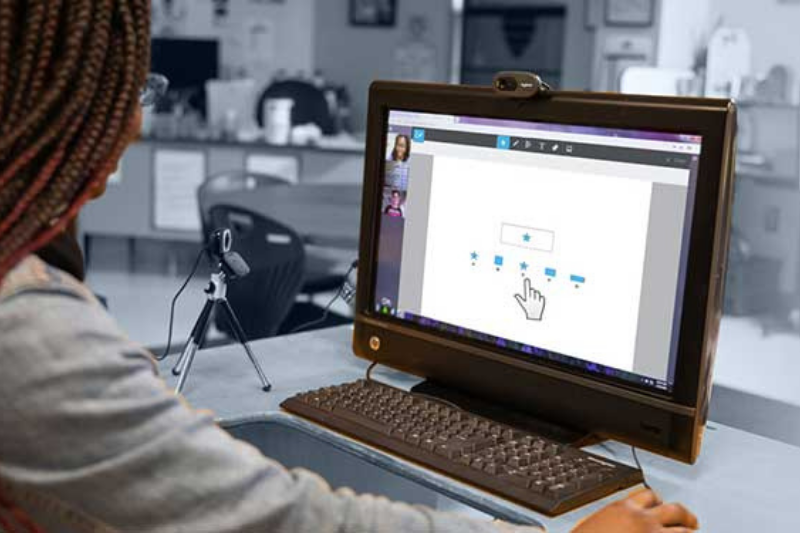
Our webinar provides a nuanced perspective on how remote assessment can both expand student access and provide a high-quality experience. Bonnie Contreras, VP of Clinical Solutions at Presence, emphasizes that remote evaluations are not a new solution—and have been developed over time with attention to administration practices, validity, and confidentiality. When implemented with care, they can be one option within a broader evaluation model.
Several factors can support strong remote administration:
- Secure, FERPA- and HIPAA-compliant technology
- Embedded visual and audio test materials
- A primary support person onsite when needed
- Clear attention to supervision and the testing environment
For a deeper look at implementation, Presence’s white paper Remote Administration of Psychoeducational Assessments offers a research-based view of how online assessments can expand district capacity.
5. Considerations for rural and multi-campus districts
For some districts, access to evaluations can be hindered by barriers of distance and geography. In our webinar, Kathleen Burdick, Special Education Administrator at Arthur CUSD 305, shares how remote school psychology services help her district manage evaluations across multiple schools while reducing scheduling strain and preserving class time. She notes that students are not pulled for extended periods, communication stays open, and remote evaluation results are comparable with that of in-person testing.
For rural districts, large districts, and multi-campus systems, remote models can support continuity when in-person resources are limited, and reduce the burden of transporting materials or staff from site to site. In these cases, teams can maintain momentum across locations with access to remote evaluations, a broader network of providers, and an online platform like Kanga by Presence that supports teletherapy and remote assessments from any location.
6. The role of professional judgment and team-based data
No assessment system, digital or remote, should be treated as a standalone answer. Evaluation decisions rely on more than a single source of data.
Dr. Stephens makes this especially clear in our webinar, noting that norm-referenced testing is only one part of the full assessment picture. Teams still need to integrate observations, intervention history, school-based data, and other evidence when making decisions about eligibility and support.
Digital tools can improve efficiency, but they do not replace professional judgment. Instead, they should help teams organize and interpret information more effectively within a broader decision-making process.
This is also where strong MTSS and referral practices come in. Referrals should be supported by thorough screening, intervention, and data review. Even with the efficiencies enabled by digital tools, the ultimate goal shouldn’t be to test more students faster, but to understand student needs more accurately and to respond more intentionally.
Presence’s Facts and Fiction About Special Education Evaluations infographic is a companion resource that can help districts better understand the capabilities of remote assessment.
7. Factors that influence adoption of new approaches
Districts exploring digital and remote evaluation models often consider a range of factors. Depending on the district, these can include scheduling onsite support during remote testing, budget considerations, and familiarity with digital tools. In some cases, prior experience with and expectations around in-person administration also shape how teams evaluate new approaches.
Remote assessment adoption isn’t just a technical decision; it also involves professional learning, cultural alignment, and ongoing evaluation of what works best for each district. School teams can benefit from being open to the evidence behind remote assessment, and remembering that school-based practice today already includes virtual components—from rating scales to meeting support to communication. Remote assessment can be a helpful extension of how schools already work.
8. How connected platforms can support evaluation workflows
Our webinar points to Kanga by Presence as an example of a tool helping schools reimagine assessment workflows with greater visibility, tracking tools, and coordination. Along with the WJ V, it’s part of a broader shift toward efficient, data-informed, and accessible evaluation systems.
For schools, a connected platform can bring administration, materials, scheduling, and documentation into one secure place. This can go a long way in reducing the coordination challenges that often slow teams down.
9. Keeping the student at the center
Our webinar emphasizes the importance of keeping the student at the center of the evaluation process.
That means looking beyond scores, incorporating multiple perspectives, and treating evaluation like a collaborative effort. It also means considering how different approaches—whether in-person or remote—can support timely and accurate understanding of student needs.
When implemented thoughtfully, remote assessment can help teams respond more effectively and develop plans that reflect each student’s learning context.
Conclusion
As special education leaders and providers continue to navigate evolving needs, remote assessment can help schools reach more students and provide a high-quality, consistent experience. Presence supports this work nationwide with remote psychoeducational assessments and teletherapy services.
For schools, reimagining psychoeducational evaluations is not about abandoning core practice. It’s about exploring and adapting to new systems that can meet the challenges of today with greater access and consistency—and optimizing practices so that students have the support they need to succeed.